

A simple look at Jeremiah 31:9
Now look at Jeremiah 31:9. I was reading it in the CSB and I came across a word that is not in my usual NKJV. The word is wadis. So I went to the Blue Letter Bible, and I looked at the Hebrew, and I compared a few other translations. What I found is a beautiful picture of God as a Father, leading His people home.
The verse in two translations
The CSB says:
They will come weeping, but I will bring them back with consolation. I will lead them to wadis filled with water, by a smooth way where they will not stumble, for I am Israel’s Father, and Ephraim is my firstborn.
The NKJV says:
They shall come with weeping, And with supplications I will lead them. I will cause them to walk by the rivers of waters, In a straight way in which they shall not stumble; For I am a Father to Israel, And Ephraim is My firstborn.
It is the same verse. It is the same promise. They are just using different English words for the same Hebrew picture.
What is a wadi?
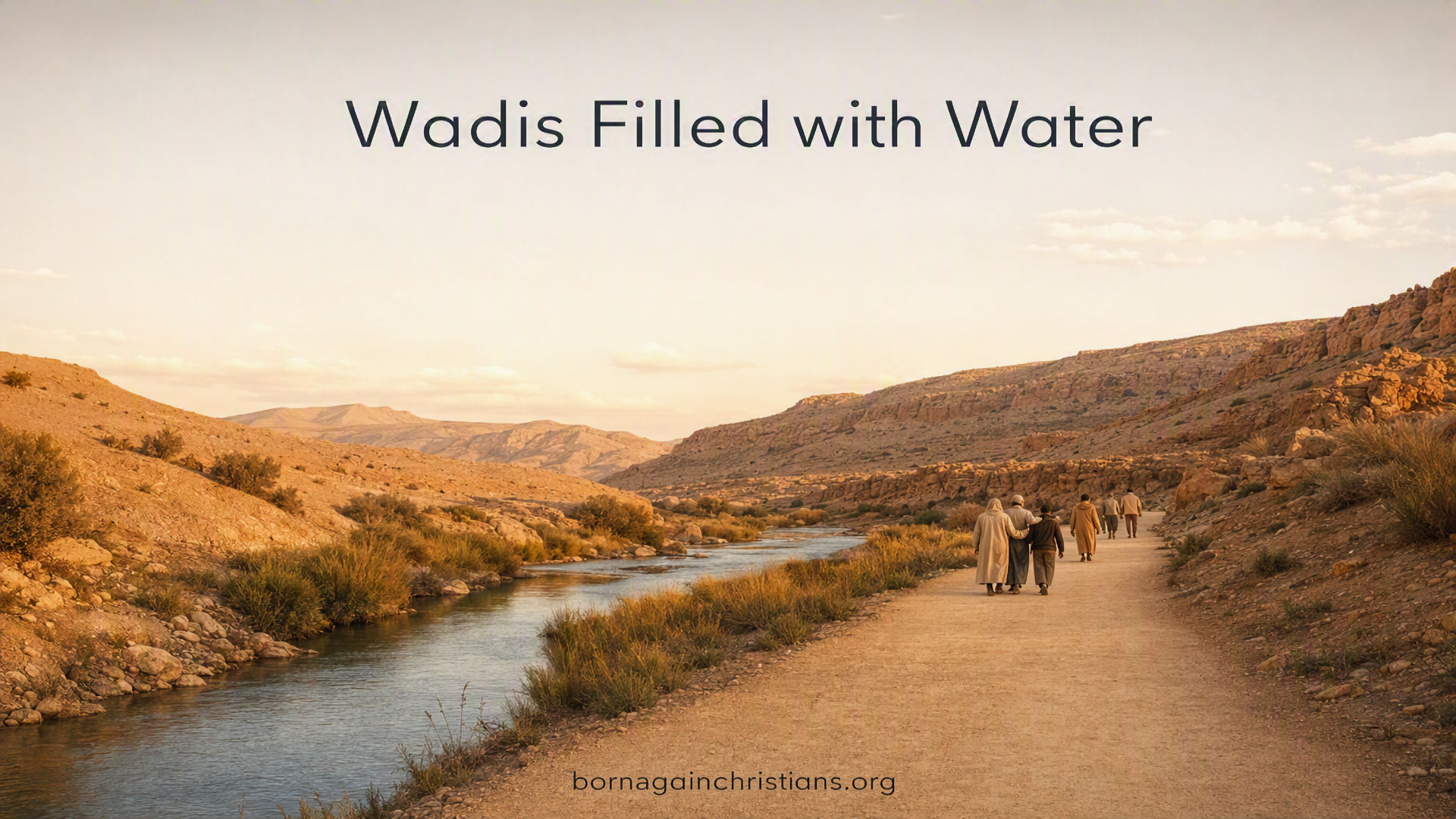
A wadi is a valley or a riverbed in a dry land. For much of the year it can sit there empty. Then the rains come, and it fills. After that it can settle into a stream or a brook that you can walk beside.
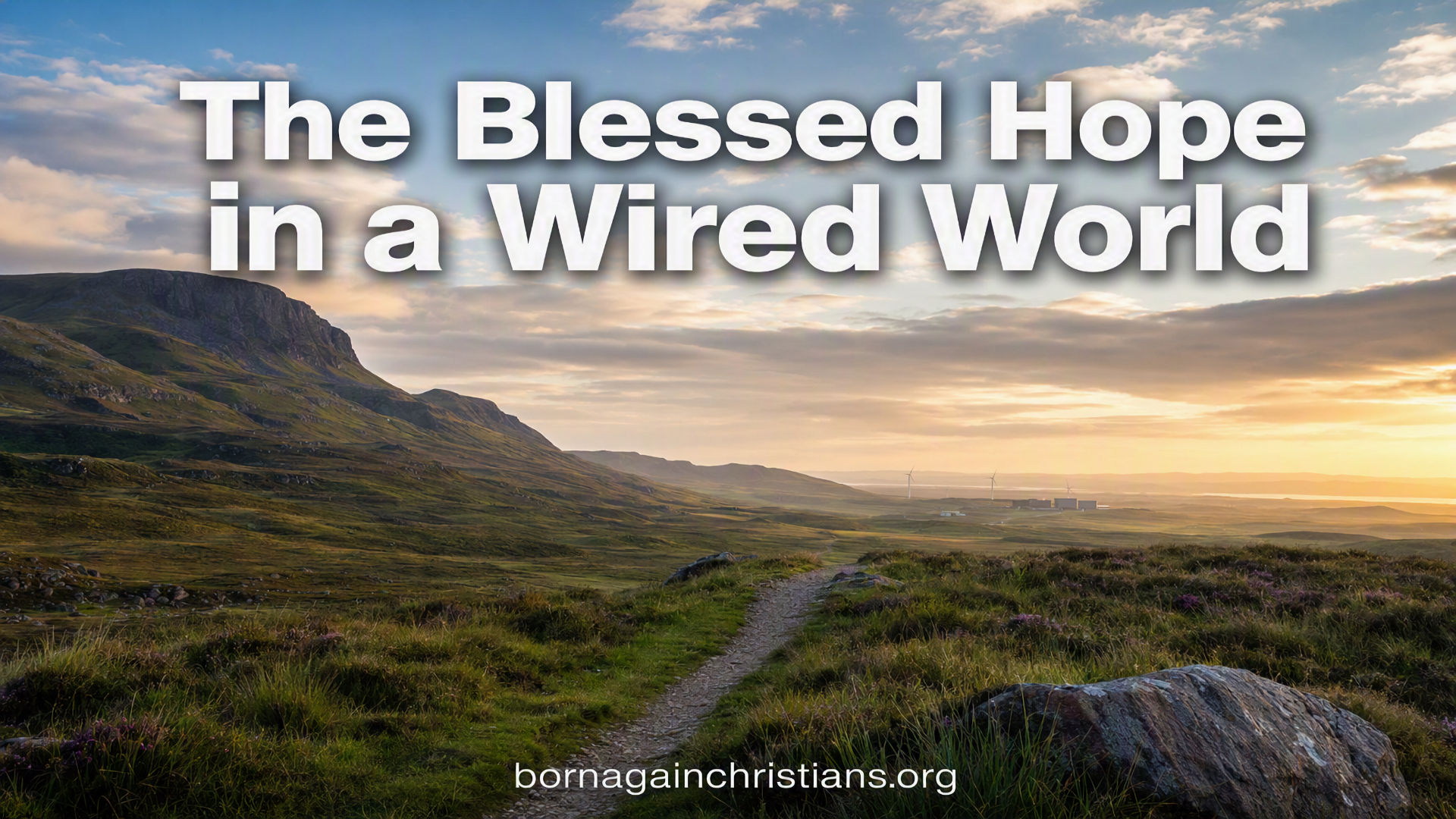
If you live in Scotland, think of that little burn running along the side of a country road. It is fed from higher ground. It sits in its own bed or ditch. After the rain it has water in it. You can walk beside it. You are not in a raging river. And you are not looking at a still pool that you would not drink from without a filter.
That is close to the picture on the ground. The CSB chose the desert word wadi. The NKJV says rivers of waters. Other versions say streams or brooks. They are all reaching for the same thing. There is water in the channel, and there is a path next to it that people can actually walk.
The Hebrew words
In Jeremiah 31:9 the phrase is nachalei mayim. That is Strong’s H5158, nachal, plus H4325, mayim, which means waters.
Now nachal is a flexible word. It can mean a dry riverbed. It can mean the torrent that rushes down it when the rains come. It can mean a brook once the water is there. It can even mean the valley itself. So torrents of waters is a fair way to put it. So is streams, or brooks, or wadis filled with water. If you looked up strongs H5158, you have the right word. That is the word.
But the rest of the verse keeps us from picturing a flash flood. God says He will lead them beside those watercourses by a smooth way where they will not stumble. The beds that were dry are now supplied. The path beside them is level. The Father is making sure His children can walk it.
Still waters and wadis of water
Psalm 23:2 says the Shepherd leads me beside the still waters. That verse also uses mayim, H4325. The extra word there is H4496, menuchah. That word means rest, quiet, a resting-place. So Psalm 23 is talking about waters of rest.
Jeremiah 31:9 is wadis of waters, or torrents of waters, it is the same word for water but different setting. To illustrate a wee bit, think of one picture is quiet water where the sheep can rest. The other is the dry beds now filled, so the people can walk home beside them. They do not fight each other. They are two sides of the same Father’s care. Sometimes He gives you rest. Sometimes He gives you a supplied path to walk.
A Scottish picture
Out on the hills, if you go off-peak and lose the path, you look for the blue line on the OS map if you're in the UK. That thin line is a stream. You follow the water down, and sooner or later you come to a track you can walk.
That is a mercy on the hill to descend, and a just way to interpret this verse, but the Lord does not abandon His people and leave them to struggle down the steepest slope; instead, He provides water where they can find it and a manageable path.
New Testament connections
The New Testament puts a name on these pictures and that name is Jesus.
Jesus said, I am the good shepherd, in John 10. He does not just point the way. He leads His sheep. That is Jeremiah 31:9 in person. The Father said He would lead them by a smooth path. The Son came and did it.
He also spoke of living water. Whoever drinks of the water that I shall give him will never thirst, John 4. If anyone thirsts, let him come to Me and drink, John 7:37. The wadis filled with water, and the still waters of Psalm 23, find their fulfilment in Him.
Jeremiah 31:9 ends with, I am Israel’s Father. Jesus came to show us that Father. He who has seen Me has seen the Father, John 14:9. Jude 24 says He is able to keep you from stumbling. That is the same promise. A smooth way where they will not stumble.
And Jeremiah 31 is the new-covenant chapter. Hebrews 8 quotes it and says Jesus is the Mediator of that better covenant. The God who promised to lead His people home by water and a level path has kept that promise in His Son.
What we can take from it
God is a Father who does not leave His children to find their own way and when they come weeping, He leads them. He puts water where they can reach it, and a path they can walk without falling.









Add comment