

Ichabod: When the Glory Departs — Word Study
Introduction
Friends, let’s open the Word together. In 1 Samuel chapter 4, verse 21, the NKJV says, “Then she named the child Ichabod, saying, ‘The glory has departed from Israel!’ because the ark of God had been captured and because of her father-in-law and her husband.” The footnote tells us the name is literally “Inglorious.”
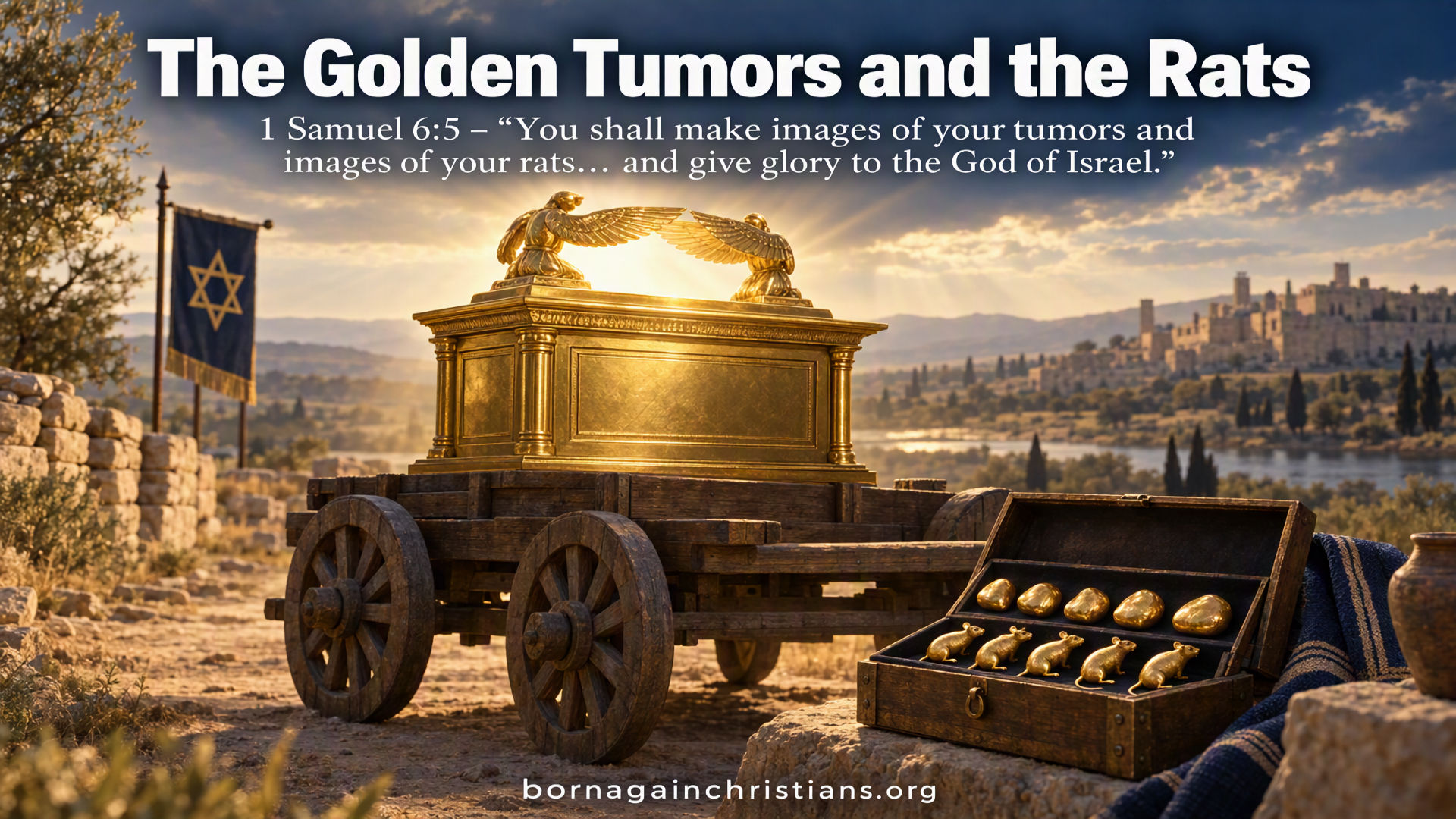
That one word sums up a very dark day in Israel’s history. The Ark of the Covenant—the visible sign of God’s presence among His people—had been taken by the Philistines. Eli the high priest was dead. His sons Hophni and Phinehas were dead. And a mother, dying as she gave birth, named her little boy Ichabod. She was saying, the glory has gone.
The name shows up again in First Samuel 14:3. There we read of Ahijah the priest, “the son of Ahitub, Ichabod’s brother, the son of Phinehas, the son of Eli.” Years later the family is still carrying that memory. The priesthood continued, but the loss of the glory is not forgotten.
This is more than an old story. The same warning runs through the whole Bible. The glory of God can leave a nation, a church, or a person when we replace the living presence of the Lord with outward forms, with relics, or with religious activity that has no first love. In the Calvary Chapel stream we have tried to stay clear of the heavy labels and arguments—Calvinism, Arminianism, and all the rest. We simply want to love Jesus, walk with Him, and help others come to know Him. That simplicity is a real safeguard against Ichabod.
The Hebrew and the Meaning
The Hebrew name is I-kabod. The first part is a little word that means “no” or “without.” Kabod is the rich word for glory, weight, honour, substance. It speaks of what is heavy and significant—the weight of God’s presence. When the glory of the Lord filled the tabernacle, it was that kabod that made the place holy and awesome. To name a child Ichabod was to say, “There is no weight here. There is no glory. There is no presence.”
The mother was not mainly naming the boy for the death of her husband or her father-in-law, though those losses were crushing. She was naming him for the capture of the Ark. Verse 22 says it again: “The glory has departed from Israel, for the ark of God has been captured.” The people had treated the Ark like a good-luck charm. They brought it into the battle hoping it would force God to fight for them. Instead the Philistines took it. The symbol was taken because the reality of God’s favour had already withdrawn through sin and unbelief.
The Context of the Tragedy
Israel was in a low spiritual state. Everyone was doing what was right in his own eyes. Eli’s sons were wicked and he did not restrain them. When defeat came, the elders asked the wrong question. They did not say, “How have we sinned?” They said, “Why has the Lord smitten us? Let us bring the Ark.” They wanted the relic without repentance. The result was greater defeat, the death of the priests, and the loss of the Ark.
Eli fell backward and died when he heard the news. His daughter-in-law went into labour and died giving birth. In her final moments she named the child. The glory had departed. Later generations would still speak of that day. The little note in First Samuel 14 keeps the name alive in the priestly line—a quiet reminder that the house of Eli continued under the shadow of judgment.
When the Glory Departs Today
The same pattern shows up whenever people settle for a form of godliness while denying its power. Jesus warned the church at Ephesus that He would remove their lampstand if they did not repent and return to their first love. The lampstand is His presence in the midst of the churches. When that is removed, what remains is Ichabod—outward activity, buildings, programmes, and history, but no weight of the Spirit.
Sometimes folklore tries to mark the moment. In old Scottish tradition, a black bird perched on the eaves or the roof was taken as an omen of trouble. There is even a story from 1925 of a blackbird flying into a Free Church service on the Isle of Lewis, landing on the preacher’s head, and scattering the people. Such stories are not Scripture. They show a culture that once expected signs of judgment. But the biblical markers are clearer: the Word is no longer central, the first love has grown cold, the presence of the Spirit is no longer sought, and people trust in past glories or religious symbols rather than the living Lord.
In our own day, the signs are plain enough; we see the news (not the mainstream media), and in parts of Europe the Christian heritage is fading while the religion of Islam advances.
In Britain street preaching that once marked the nation now faces restrictions and arrests. Churches here in Scotland that once sent missionaries can find their own public witness limited. These are serious matters. Yet they are not the primary evidence that the glory has departed. The primary evidence is spiritual. It is when the people of God grow content with emotional musical worship, with not hunger for the Word being taught; they leave church after a service without edification and no spiritual growth; when the simple desire to know Jesus and make Him known grows cold, when debates like Calvinism and Arminianism and labels replace walking with Him.
We follow the Calvary Chapel Emphasis
One strength of the Calvary Chapel approach we follow at Born Again Christians has been refusing to carry unnecessary theological guff. The focus stays on loving Jesus, walking with Him daily, and wanting people to know Him. That is not anti-intellectual. It is a deliberate choice to keep the main thing the main thing.
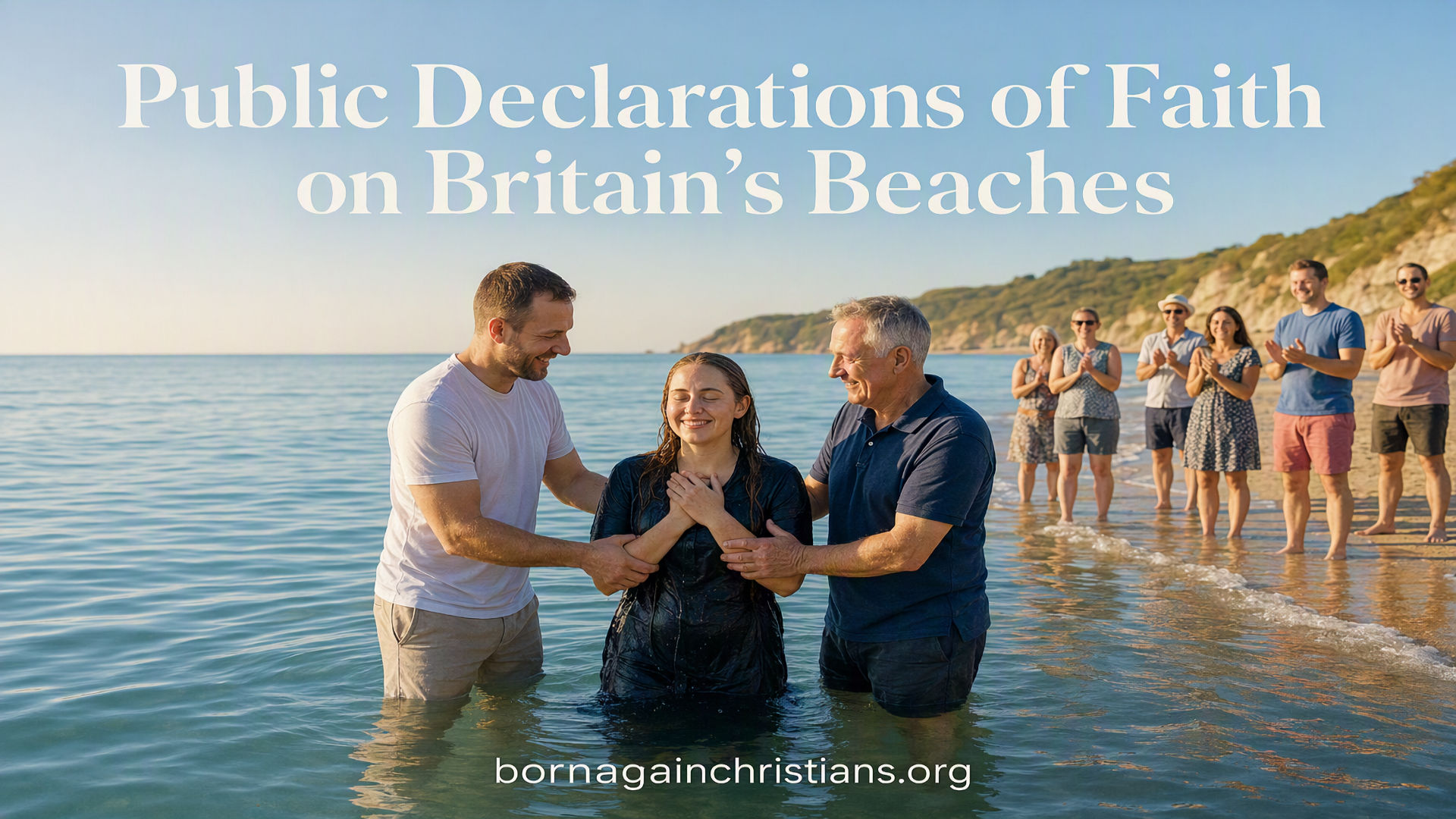
When the heart is set on Christ, the Spirit is free to work. The recent reports of more than 550 baptisms, and plans for believers to share what Christ has done in their lives on New Year’s Day, are evidence of that life. Baptism and personal testimony are the natural fruit of people who have met the living Lord and are walking with Him.
Street evangelism remains important as the charge to Timothy still stands: preach the Word in season and out of season. Men such as Rod and Jamie in Exeter, posted by UKbiblelad on Instagram, and others like them, simply lift up Christ in public places.
Where that is done in love and dependence on the Spirit, the Lord still opens hearts. The early church often had little public platform, yet the Word spread. The same Spirit who worked then works now.
The Way Back
If the glory has departed, the way back is the same as it has always been. In Revelation 2:5, Jesus gives a three-part command telling Ephesus to remember from where they had fallen, repent, and do the first works.
Jeremiah 2:2 reminded Israel that the Lord still remembered the kindness of their youth and the love they once showed Him. The call is not to recover a past system or a past cultural dominance. The call is to return to the person of Jesus Christ.
The glory that left Shiloh did not remain gone forever. It returned to Israel, culminating in the construction of Solomon's Temple in Jerusalem. Then, in the fullness of time, the true Glory came and tabernacled among us. Today, the Spirit of God still desires to dwell in the midst of His people and within our individual lives.
When people truly love Jesus, they are not trying to manage Him or use Him. They simply want to be near Him. They talk to Him in the ordinary moments of the day. They open the Scriptures because they want to hear His voice, not just to gather information. And when they speak of Him, they speak plainly—what He has done, who He is, and why He came. In that place, the presence of the Lord is not far off. He draws near to those who draw near to Him.
You know folks, the way we gather to worship and study the Bible can be very simple. We are the church without walls. It could be a living room, around a kitchen table, a small hall, or a few chairs in a café, just a place and an open Bible. The building can be ordinary, nothing fancy. The numbers can be modest as none of that measures the weight of God’s glory. The glory is known in lives that are being changed, where people who once walked in darkness now walking in light, and people who once had no peace now knowing the peace that surpasses understanding.
This is not complicated, you know it is the exact same simple walk the early believers knew. They had no grand buildings and no large numbers at the beginning, yet the presence of the Lord was among them. The same Lord is still among us today with those who love Him, walk daily with Him, open His Word to listen to Him, and speak of Him in a normal plain way. That is where the glory rests.
Conclusion
I know some of you come to this article of the word Ichabod, yes it is a tragic name, but it is not the final word. The Lord who allowed the Ark to be taken still rules. He still calls His people to remember, to repent, and to return to their first love.
He still uses ordinary men and women who simply want others to know Jesus and who are willing to walk with Him day by day.
The debates and systems can wait they are noise to God. The street preaching may be restricted. The culture may drift even to depths that we couldn’t ever imagine. Yet wherever the Word is preached and hearts turn to Christ, the glory has not finally departed.
That is the hope we carry. Keep loving Jesus. Keep walking with Him. Keep pointing others to Him. The presence of the Lord is still found there.













Add comment